The practice's recurring work, under control
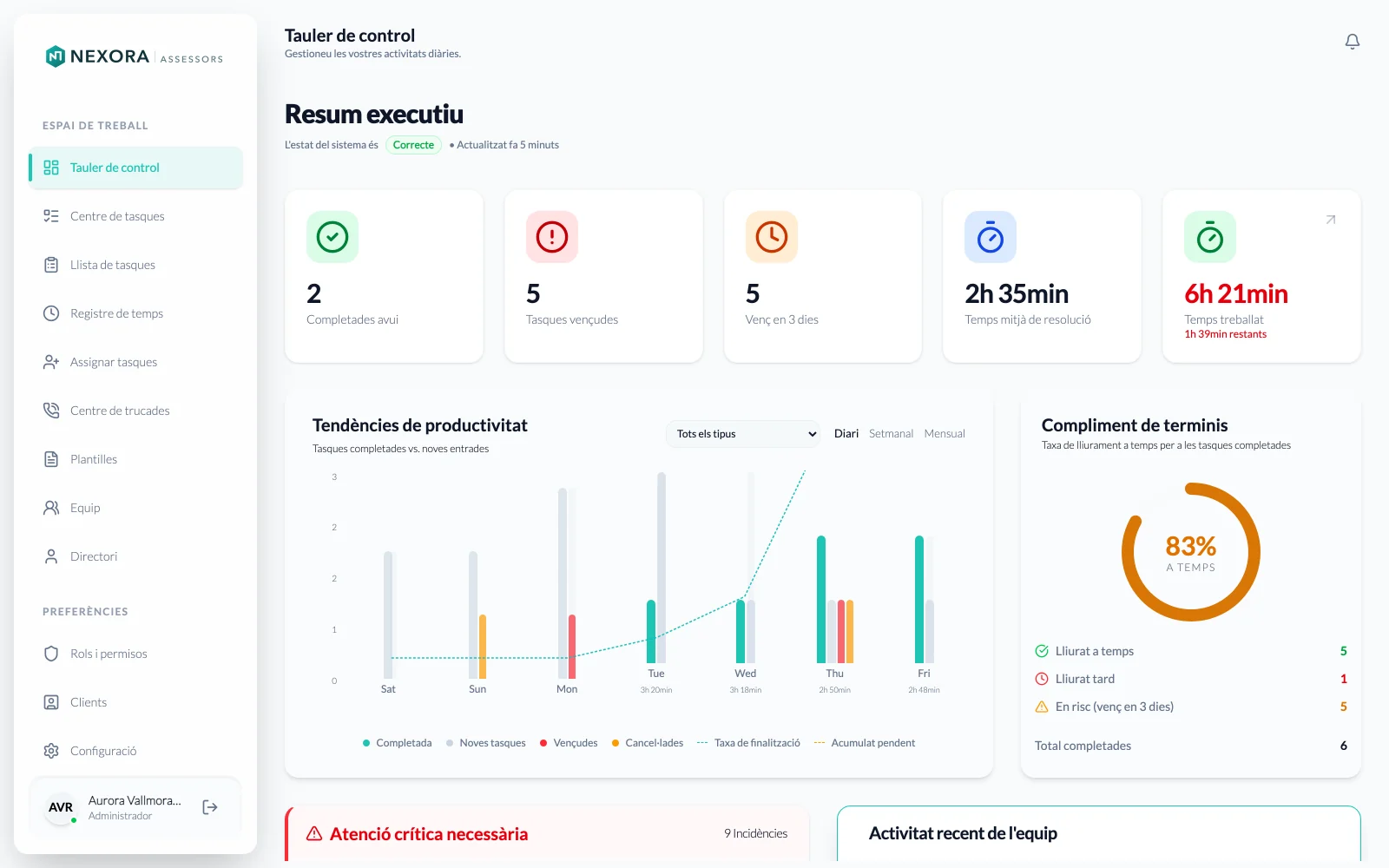
Recurring statutory work turned into templated, assignable, deadline-tracked tasks, and a dashboard that tells the partners whether the practice is keeping up.
- Built for
- A business advisory and back-office firm serving a book of company clients
- Shape
- Internal platform with background workers
- Delivered as
- Web platform and installable PWA
- Status
- Live in production
The problem
An advisory practice does the same work every quarter for every client. The work is predictable; the failure is not.
Something slips because one person was holding the schedule in their head, and the first anyone hears about it is a penalty notice. The partners also had no honest measure of capacity: who is overloaded, which step is the bottleneck, whether they deliver on time.
Work arrives assigned, not waiting to be assigned
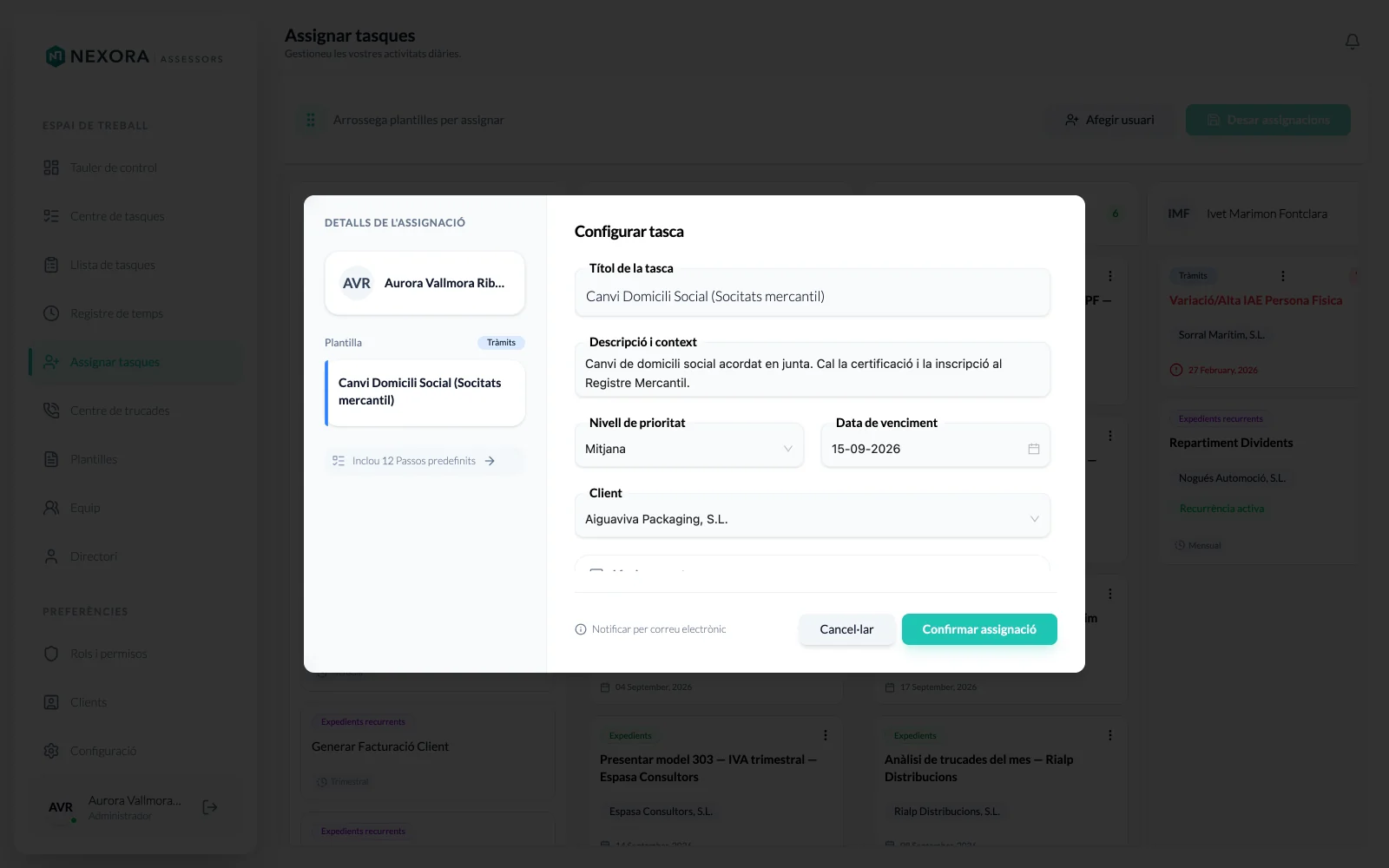
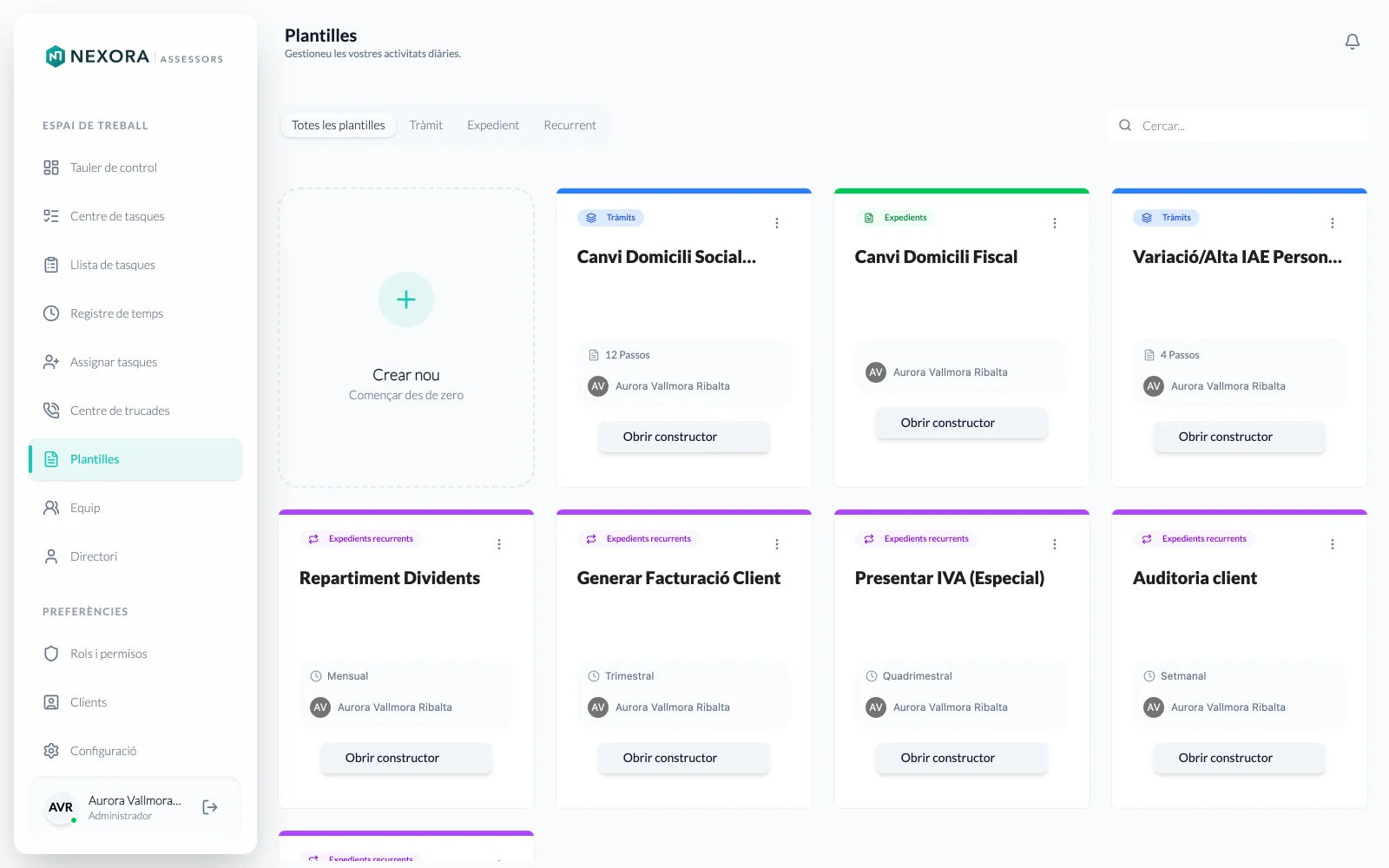
Every recurring obligation is a template with ordered steps, some blocking and some dependent on others, each with an estimated duration. A recurrence engine creates the real task ahead of its deadline and assigns it, so the schedule lives in the system rather than in memory.
On top sits measurement: time logged against steps, deadline compliance, bottleneck detection and per-person load. The platform also imports the phone system's call records and attributes each call to a client and a staff member.
What it does
Task templates with steps
Ordered steps that can block progress or depend on each other, each with an owner and an estimated number of hours.
Recurrence engine
Daily through annual, including the quarterly and four-monthly cycles Spanish filing actually runs on, with per-instance overrides.
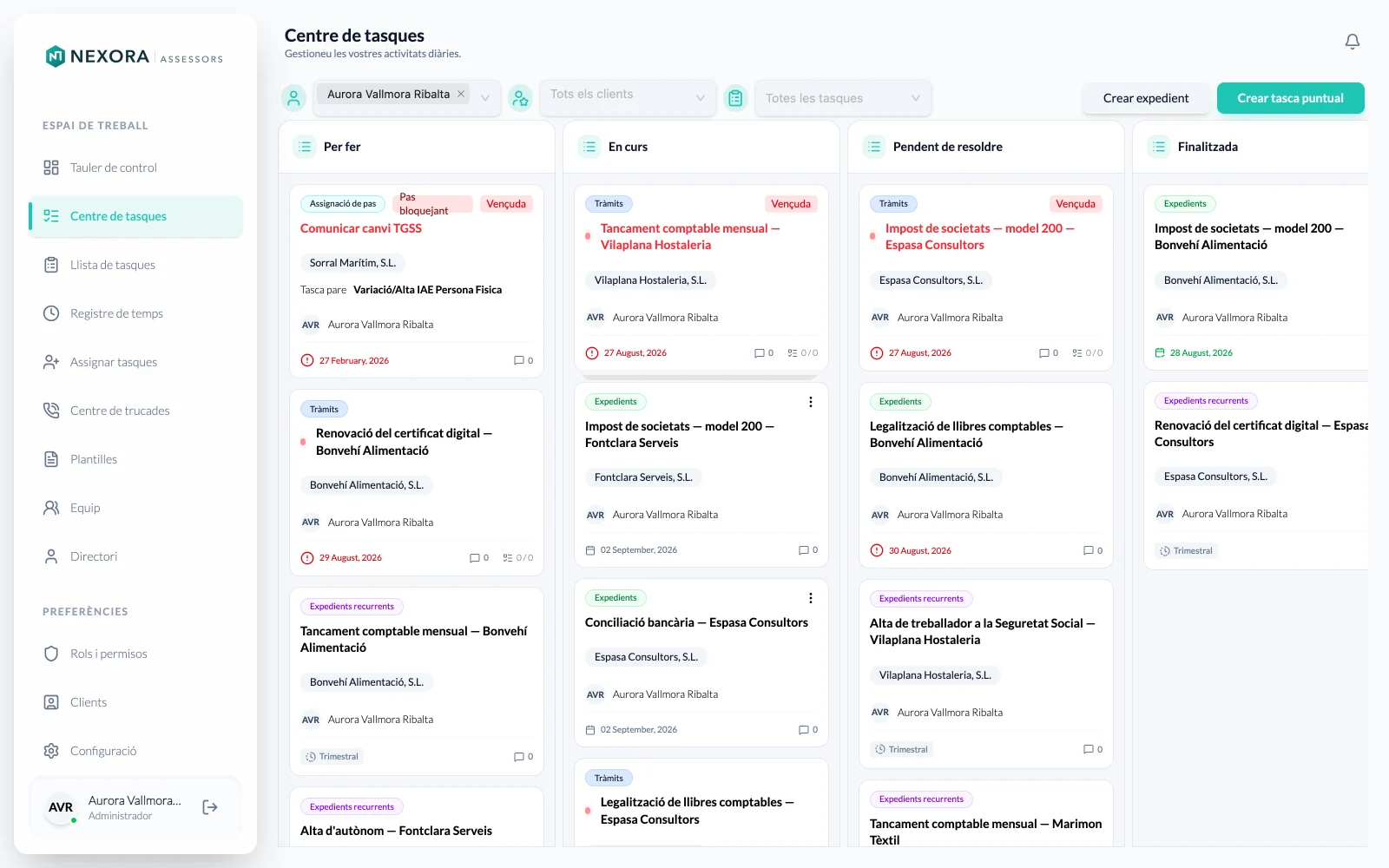
Task centre
A kanban board filtered by person, client or type, with priority, deadline state and blocking steps visible on the card.
Time tracking
Work sessions logged against tasks and steps, including why a task was paused, feeding both billing and capacity.
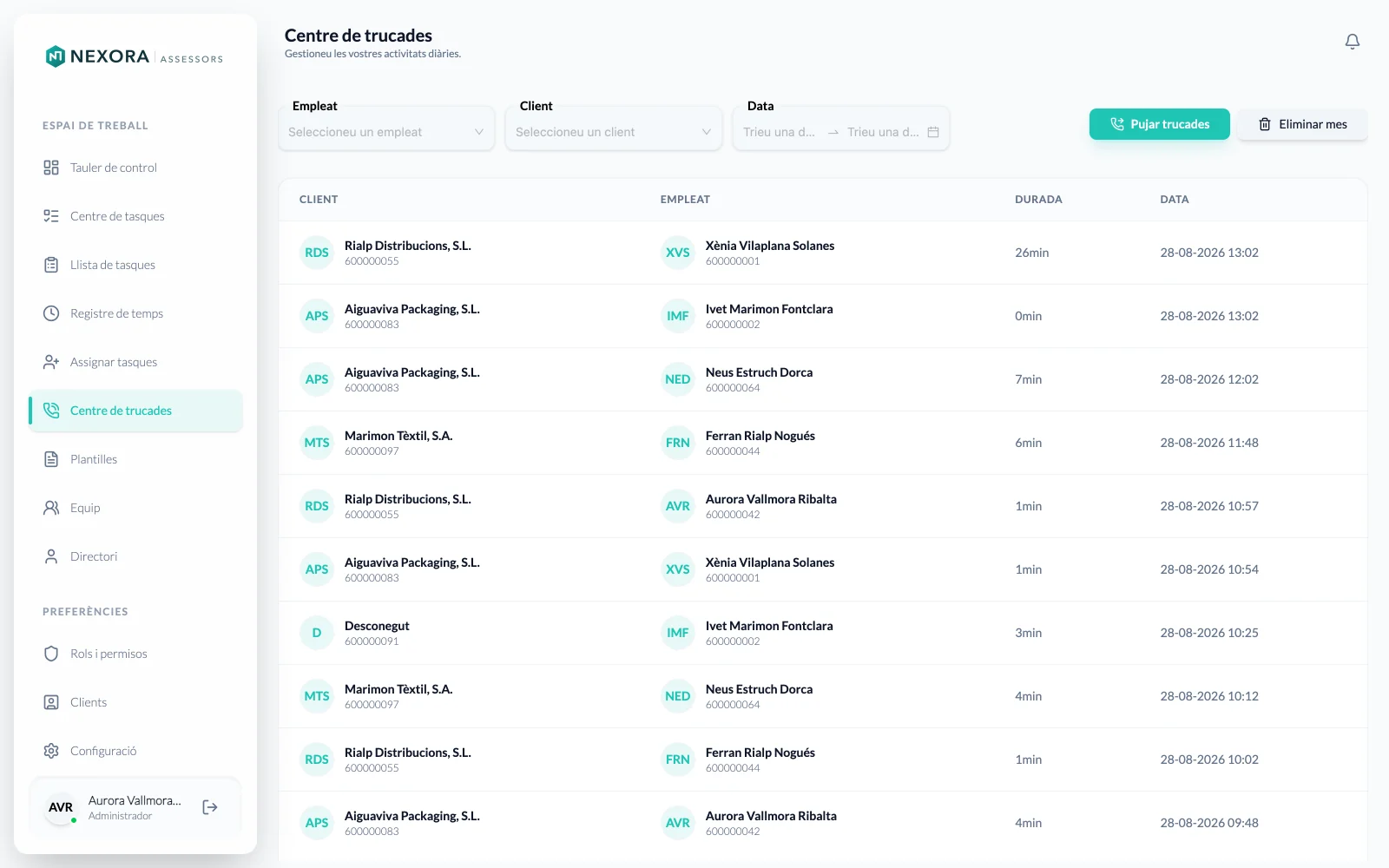
Call analysis
Bulk import of the phone system's records, matched automatically to the client and the employee on each call.
More screens
This is a client system, shown anonymously: the client's name, brand and data have been withheld. Screenshots show the real, running interface against a demonstration dataset. Every name, logo and person visible in the screenshots is fictitious and belongs to that dataset.